



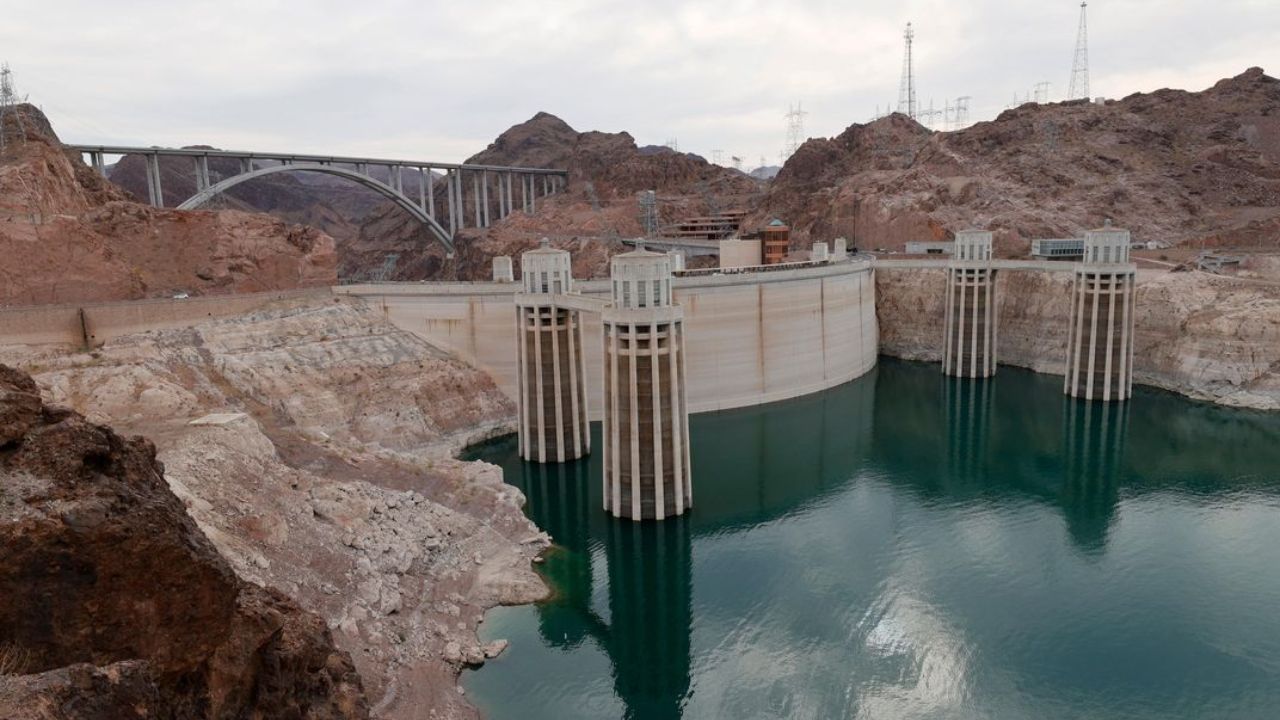
LAS VEGAS, Nevada — A new federal forecast is painting a troubling picture for the Colorado River, with projections showing Lake Mead dropping to its lowest level since Hoover Dam was completed in the 1930s. After a record-low Rocky Mountain snowpack and another year of persistent drought, water managers say the nation’s two largest reservoirs face a critical period with little immediate relief in sight.
The latest U.S. Bureau of Reclamation projections estimate Lake Mead could fall to 1,035.86 feet by November, roughly 6.5 feet below its current level. By June 2028, the reservoir is expected to decline even further to 1,009.69 feet, leaving the lake at just a fraction of its full capacity.
Lake Mead and Lake Powell Continue to Decline
Lake Mead, the nation’s largest reservoir, is currently operating at 27% capacity, while Lake Powell has dropped to about 24% capacity. The Bureau of Reclamation’s updated 24-month study forecasts continued declines unless significantly wetter conditions return to the Colorado River Basin.
Officials have been working to keep Lake Powell above the critical 3,525-foot elevation, which is needed for Glen Canyon Dam to continue generating hydroelectric power. To achieve that, water releases from upstream reservoirs, including Flaming Gorge Reservoir, have been increased while releases from Lake Powell have been reduced.
Water Cuts Likely for Arizona and Nevada
Because Colorado River shortage declarations are based largely on Lake Mead’s elevation, the continued decline is expected to trigger additional water allocation cuts for Arizona and Nevada beginning in 2027.
Despite the projections, Southern Nevada water officials say Las Vegas residents are not expected to face immediate water shortages.
“Nevada is using far less than its allocated share of Colorado River water thanks to aggressive conservation and water recycling efforts,” officials with the Southern Nevada Water Authority have said.
Around 90% of Las Vegas’ water supply comes from Lake Mead, but extensive recycling programs have helped the region remain well below its current allocation.
Worst-Case Forecast Raises New Concerns
Federal forecasters also released a “probable minimum” scenario showing Lake Mead falling below 1,000 feet by June 2028 if extremely dry conditions continue.
Many climate scientists believe these lower-end projections have often proven closer to reality during the Colorado River’s long-term drought, which began in 2000.
The shrinking reservoirs highlight the growing imbalance between available water and demand across the Southwest, where the Colorado River supplies drinking water and irrigation to approximately 40 million people.
Climate Change and Future Water Rules
Scientists estimate that climate change has reduced water flow in the Colorado River Basin by roughly 20%, leaving less water available while demand continues to grow.
Federal officials are now developing new long-term operating rules for the river after the seven basin states failed to reach a comprehensive agreement on future water sharing. Those updated guidelines are expected to take effect in 2027, replacing the current rules that expire at the end of this year.
With another dry year unfolding and reservoir levels continuing to fall, water managers say the coming years will be crucial for the future of the Colorado River system and millions of people who depend on it.
What are your thoughts on the Colorado River’s growing water crisis? Should stricter conservation measures be introduced to protect Lake Mead and Lake Powell? Share your thoughts respectfully in the comments below.